Leading Industrial Chemicals Company · 2023
Refined Refinery
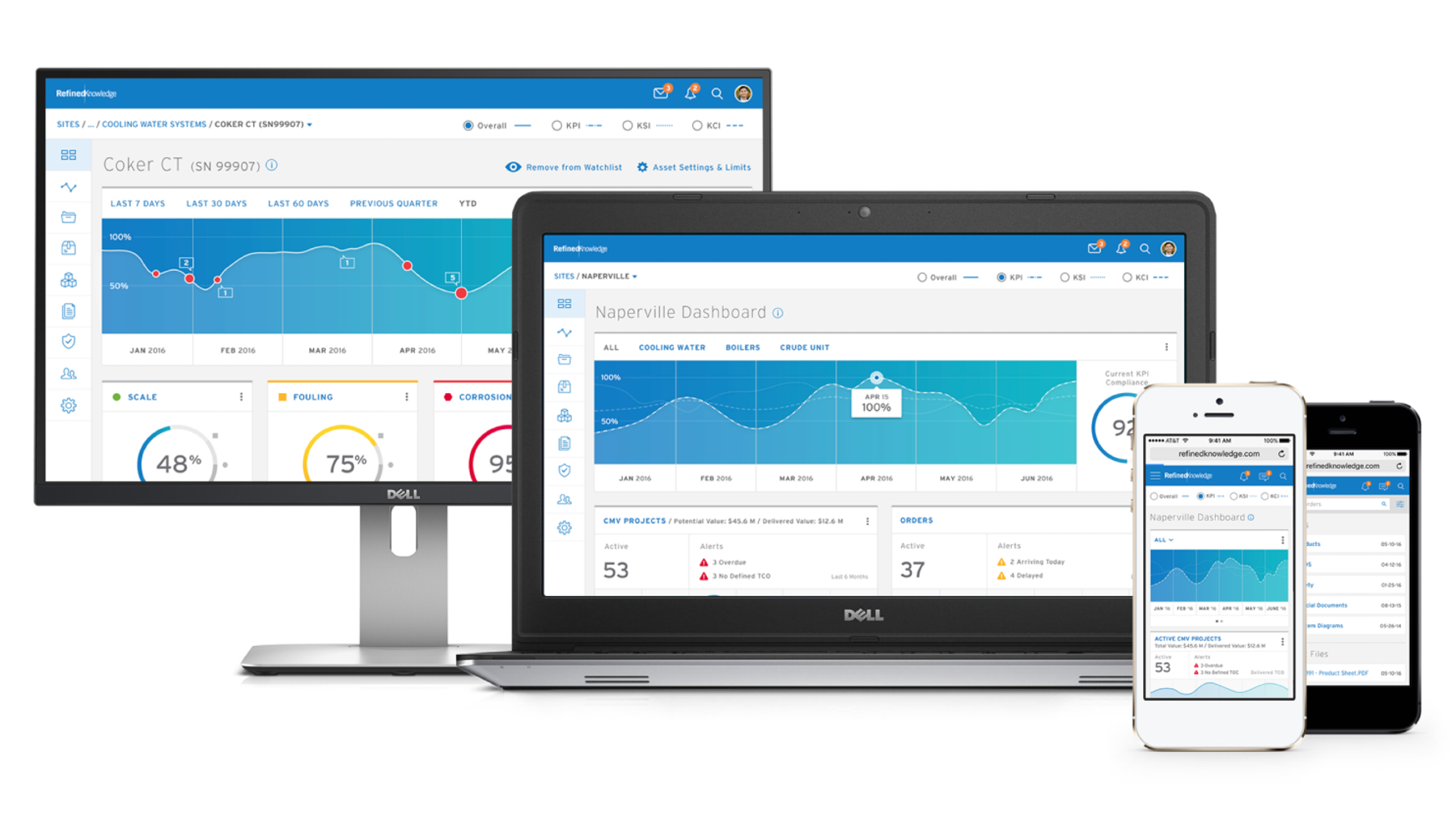
A unified, platform agnostic system that helps provide new opportunities to clients by correlating data and creating actionable insights.
- Stakeholder interviews
- 0
- Comparative analysis
- 0
- User (proxy) interviews
- 0
- User archetypes
- 0
- Wireframes
- 0
Process
Process
Process
To get an initial sense of the perceived issues with the current system, we engaged stakeholders through 1:1 interviews. The team synthesized the outcomes of these conversations and compared it to the outcomes of a heuristic analysis of the current system, as well as a comparative analysis of similar systems inside and outside of the industry.
The team presented the outcomes of this analysis during a collaborative workshop, in which the main goal was to get to a singular vision that was supported by all key stakeholders.
Challenges
Endeavours were previously made to improve the current system, but were unsuccessful. This caused some stakeholders to be weary to entrust us with a) their time and b) the agency to propose solutions that would fundamentally challenge the status quo.
By ensuring that stakeholders felt truly heard during our 1:1 sessions with them, including them in crucial decisions and having a strong relationship with the client-side product owner we were able to earn trust within the organization and turn once-reluctant stakeholders into product champions.
Deliverables
Applying Structure
Having aligned on a shared vision of the product across all identified end-user types, we created a cohesive information architecture to guide the development of key wireframes and ultimately high fidelity visual designs that represented detailed core-workflows across the new system.
Central to the information architecture is the concept that 5 core areas of information (Reports, Data, Projects, Documents, Safety) are available on different levels of granularity, with the site being the most broad and the individual asset being the most detailed.
Translating Structure to Screens
Unifies previously dispersed information into a single interface and uses a combination of a task based navigation pattern with an emphasis on contextual navigation.
Supports development of client relationships by surfacing insights that enable both prevention and innovation. By applying the physical concept of the site (Asset, Unit, Site Area, Site) as the navigation pattern for the website it creates an immediate sense of familiarity.
Introducing Visual Simplicity
To fully define the user experience of the platform, we developed a series of detailed visual designs that serve as the blueprint for the future state of this platform.
It brings to life the refined, actionable insights garnered from our research. Our visual compositions articulate a sophisticated, intuitive user experience, emphasizing clarity, efficiency, and engagement. By harmonizing style boards, color palettes, and typography with the core functionalities of the system, we've crafted a visual language that enhances interaction with the platform, ensuring a seamless and productive journey.
Site Navigation
An intuitive navigation system empowers site technicians to swiftly identify issues within their assigned sites. This feature allows for seamless drilling down into detailed and historical data, facilitating the determination of causes and solutions for any arising issues.
Order Verification
Timely delivery of orders is crucial for the efficient operation of refinery sites. The Order Verification feature highlights reports of delayed orders, providing essential insights for swift corrective actions, ensuring operational continuity.
Compliance Management
Compliance Management simplifies access to both current and historical system details, vital for the effective management of refinery assets. It leverages clear trend lines to signal potential issues, enabling proactive measures to maintain compliance and operational integrity.